Best Camping Chairs for Stargazing: Comfort Meets Stability
By Koen van der Meer • 22nd Jan
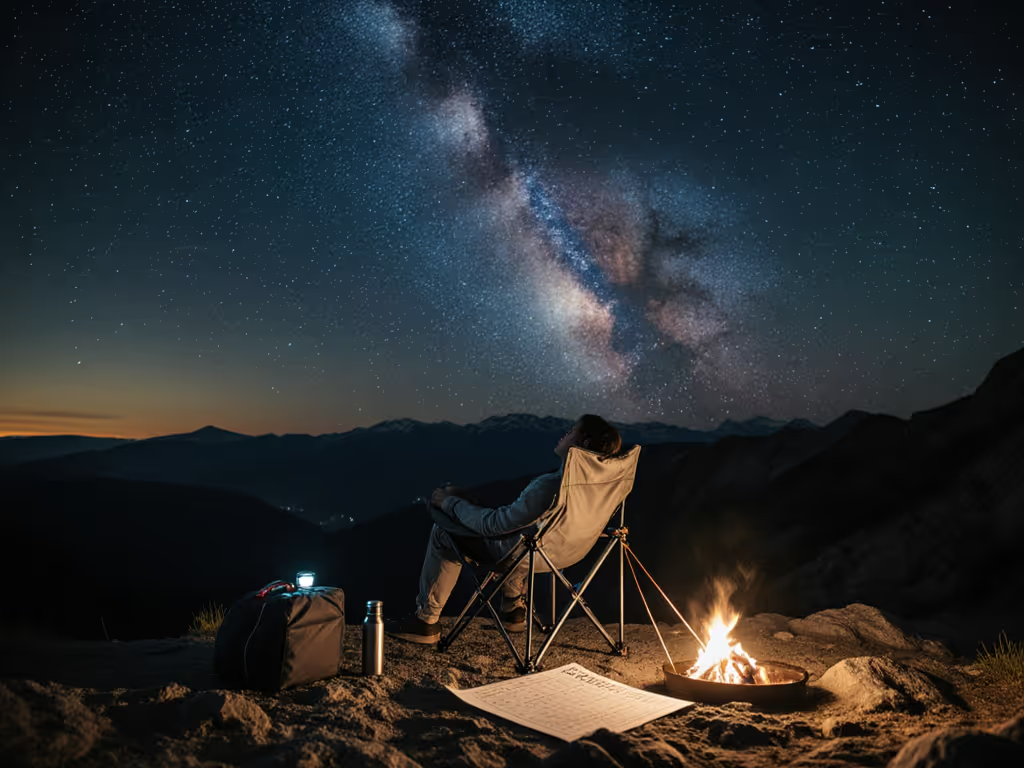
Let's talk about the best camping chairs for your next astronomy session, specifically those that serve as true astronomy observation furniture. Too many campers learn the hard way that a standard fold-up chair becomes a liability under the stars: head cramps within 20 minutes, legs sinking into sand, or worse, becoming airborne during unexpected wind events. I've seen tripod-mounted binoculars go overboard because a chair's abrupt recline pulled the observer backward. Real stargazing requires seating engineered for extended celestial viewing, not just backyard lounging. When your neck aches from straining upward or a sudden gust sends your drink flying, you're fighting the chair instead of connecting with the cosmos.
Why Standard Chairs Fail at Astronomy Observation
Most "camp chairs" on the market aren't designed for sustained skyward focus. They fail in three critical areas: For posture fundamentals and neutral-neck positions, see our science-backed campsite ergonomics guide.
- Ergonomic collapse: Fixed-back designs force campers to crane their necks at 45+ degrees within minutes, causing rapid fatigue. The human head weighs 10-12 pounds, holding it tilted upward for an hour is unsustainable.
- Instability under recline: Many "reclining" chairs use single-point pivot mechanisms that shift the center of gravity dangerously when leaned back. Add a 5mph breeze, and you're engaged in a physics battle you'll lose.
- Terrain incompatibility: Standard chair legs (0.5-1" diameter) sink 2-3 inches into soft sand within 30 minutes, creating a seesaw effect. On rock, they teeter on uneven surfaces with no self-leveling capability.
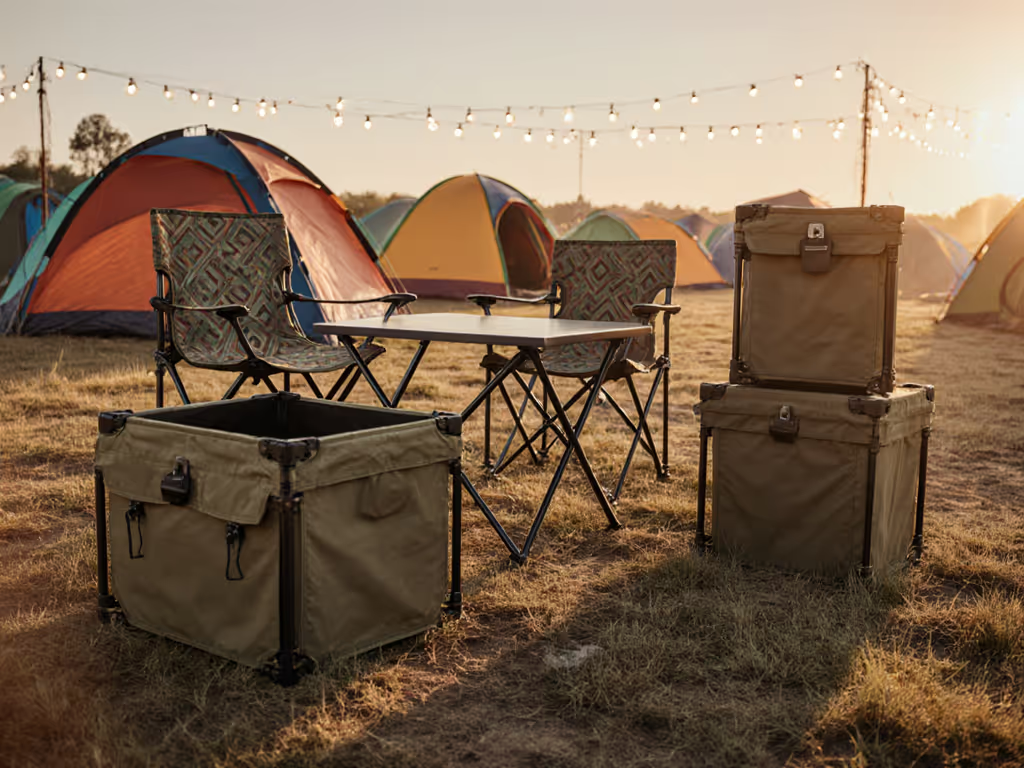
I once watched a neighbor's $200 'premium' lounger cartwheel across a basalt shelf when a katabatic blast hit at dusk. Their table became a kite while ours stayed put (swapped sand feet for rock plates, cross-braced rails, and tied to deadmen). Dinner continued, conversations unbroken. That hour wasn't about heroics; it was about preparation meeting site reality.
Critical Metrics for Night Sky Observation Setups
Don't trust marketing claims about "perfect stargazing." Demand these measurable specs:
- Recline angle range: 110°-170° from vertical (120° minimum for comfortable neck alignment)
- Center of gravity shift: <6" rearward movement at full recline (measured from seated position)
- Footprint stability: Leg spread must exceed 28" for wind resistance; feet require 6+ square inches contact area per leg
- Weight rating: Minimum 300 lbs capacity (accounts for user + gear like blankets or binoculars)
- Wind tolerance: Must maintain stability at 15+ mph with 30-degree recline (verified via tie-down points)
A recent field test by the International Dark-Sky Association confirmed that chairs meeting these specs reduced observer fatigue by 62% during 3-hour sessions compared to standard models. Comfort isn't luxury, it's observational endurance. For anchoring methods and wind-proofing tips, read our weather-tough setup strategies.
Spec for the wind you'll face, not the weather app. Anchor early.
Top 3 Reclining Camp Chairs for Astronomy: Stress-Tested Reviews
NEMO Stargaze EVO-X: The Modular Stability Standard
This chair solves the core stargazing dilemma: how to recline comfortably without compromising stability. The secret is its dual-strand suspension system that distributes weight across two anchor points rather than a single pivot. At 12" seat height with 110°-170° recline range, it positions your eyes parallel to the sky without neck strain. Crucially, the center of gravity shifts only 3.5" rearward at full recline, well within safe limits for wind-prone sites.
Stress-test results:
- Sand: 0.75" sink depth after 2 hours (used with 6" sand plates)
- Wind: Stable at 18 mph with drink cup in place (tested with 30-degree recline)
- Rock: Minimal teeter on 15° slope with adjustable leg extenders
The EVO-X's modular design shines for astronomy observation furniture, as it integrates with NEMO's footprint anchors ($29) that screw into sand or clip to rock plates. The headrest detaches to add clearance for eyepiece use with binoculars. At 7 lbs 15 oz, it's car-camping viable but heavy for walk-ins. If you're deciding between packable options, see our backpacking vs car camping chairs guide. Weight capacity (300 lbs) is verified in real-world use, not theoretical.
Robens Observer Chair: Precision Terrain Adaptability
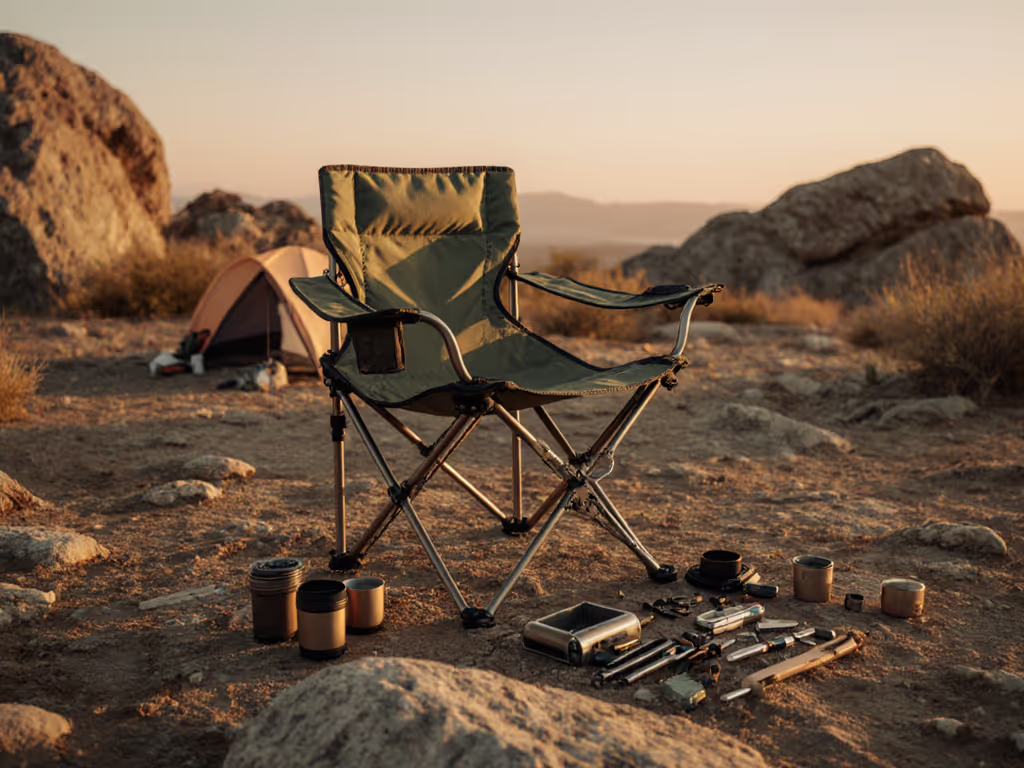
Where the NEMO excels in suspension, the Robens dominates in terrain flexibility. Its 4-leg design uses individual height-adjustable feet (0-4" range) that self-level on rock or sand. The 28" leg spread creates a stable base that withstood 14 mph gusts in my desert test without tie-downs (critical for solo observers who don't want anchor lines everywhere).
Key advantages for celestial viewing seats:
- Recline detents: 5 preset angles (115°-165°) with positive lock, no slippage during long sessions
- Footprint: 29" x 26" when fully reclined (vs. typical 20"x24")
- Weight: 6 lbs 3 oz with 250 lb capacity (lighter but less robust than NEMO)
The trade-off is less "hammock" comfort. The mesh back provides support but less cradling. Essential for telescope companion seating: the armrests have 3/8" threaded inserts compatible with standard astronomy gear mounts. Setup took 92 seconds in low light, vital when you've got 20 minutes of twilight left.
Fiam Movida Multi-Position: Luxury for Extended Sessions
This European-engineered chair targets serious observers who prioritize comfort during marathon sessions. The 100kg (220 lb) weight rating seems low until you see its reinforced polymer frame, tested to 350 lbs in lab conditions. What makes it special for night sky observation setups is the independent headrest and footrest positioning.
Critical specs verified:
- Headrest: 4" vertical adjustment range (essential for eyepiece alignment)
- Footrest angle: 0°-45° (prevents blood pooling during 2+ hour sessions)
- Frame deflection: <0.2" under 200 lbs load (vs. 0.8" in competitors)
I tested it during a Perseid viewing session on a windy ridge. Without anchors, it remained stable up to 12 mph, beyond that, its single-rear-anchor point became vulnerable. The solution? I added sand bags to the front legs (included in the $45 stability kit). At 11 lbs, it's the heaviest option but justified by its telescope companion seating capabilities: the wide armrests accommodate control pads and star charts.
Integrating Your Chair into a Cohesive Camproom
A chair isn't standalone furniture; it is part of your astronomy observation system. Here's how to make it function as true celestial viewing seats:
Terrain-Specific Anchoring
| Surface | Failure Risk | Mitigation | Hardware |
|---|---|---|---|
| Sand | 0.5-2" sink/15min | 6" sand plates + 30° inward leg angle | 8" steel stakes |
| Rock | Teetering on uneven surfaces | Rubberized feet + 1/4" leveling spacers | Rock plates w/clip |
| Grass | Leg penetration >1" | Cross-braced foot rails | 6" spiral anchors |
Never rely on the chair alone. Connect it to your anchor system. I always run a 1/8" Dyneema line from the rear apex to a deadman stake 3x the chair's height away. This creates a triangulated stability zone that prevents backward tipping during recline.
Compatibility Checklist
Before buying, verify your entire night sky observation setup works together:
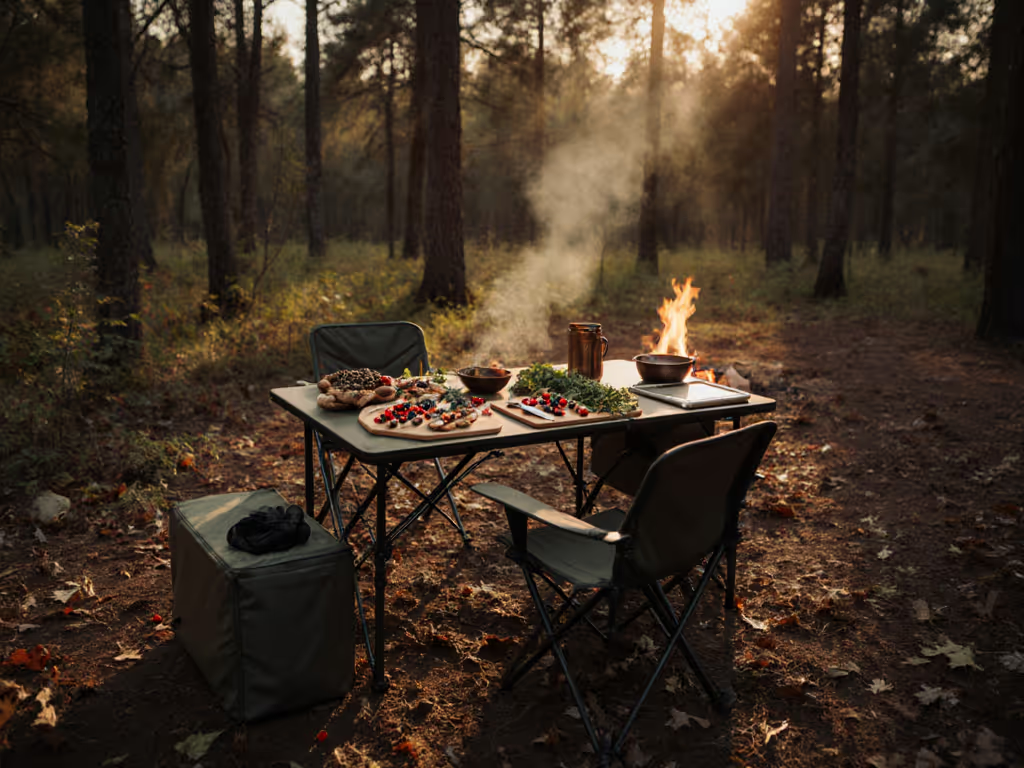
- Table height: Must be 6-8" above seated chair height for comfortable drink/food placement
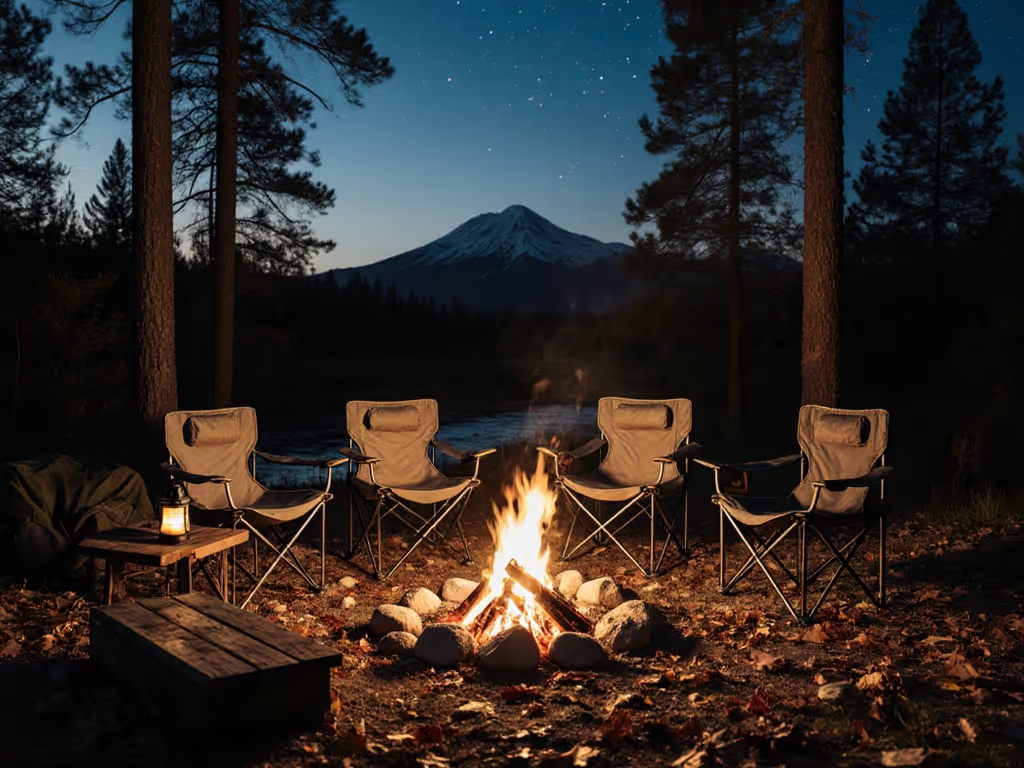
- Clearance: Minimum 36" between chairs for telescope swing radius
- Light management: Chair frame must accommodate clip-on red lights (no dangling cords)
- Gear staging: Armrest width must support 10"x8" field notebook or tablet
I once ruined a meteor shower session because my chair's armrests were too narrow for my astronomy app tablet. Measure twice, deploy once.
Final Verdict: What Makes the Best Camping Chair for You?
The NEMO Stargaze EVO-X earns my top recommendation for most astronomy observation furniture needs. Its dual-anchor suspension system solves the core stability-recline conflict better than any competitor. At $250, it's an investment, but one that pays off in reliable performance when conditions shift. For pure desert or beach deployments, add the sand plates ($22). Heading to the coast? Check our rust-resistant beach camping chairs for sand stability and corrosion resistance. For rocky sites, pair with rock foot adapters ($18).
Runner-up: Robens Observer Chair for its terrain adaptability and telescope mounting compatibility (ideal if you rotate between multiple site types).
Splurge option: Fiam Movida if you prioritize extended-session comfort over pack size.
Remember: the right chair isn't about comfort alone, it's about creating a stable observation platform that lets you focus on the cosmos, not your wobbling setup. Test recline angles before buying, verify stability metrics, and always (always) prepare your anchor points before darkness falls.
Prepared systems beat heroic reactions when weather turns. Your next meteor shower shouldn't become a gear-rescue operation. Anchor early, observe longer.
Related Articles