Master Campsite Acoustics: Quiet Zones Without Construction
By Koen van der Meer • 11th Jan
When your campsite sits exposed to canyon winds or dense forest edges, campsite acoustics become as critical as wind tolerance. Ignoring sound management camping leaves you reactive, chasing noise instead of crafting functional social space. I've seen groups abandon meals when neighboring generators drown conversation, or families retreat to tents after midnight due to amplified campfire chatter downwind. Prepared systems beat heroic reactions when sound conditions turn hostile. This guide addresses how terrain and layout dictate auditory privacy (no permanent fixtures required). For step-by-step zone planning without extra gear, see our campsite zoning guide.
FAQ Deep Dive: Engineering Quiet Zones in the Wild
Q1: Why do typical campsites feel so acoustically chaotic?
Failure mode: Flat terrain with sparse vegetation creates sound channels. Low-frequency noise (generators, bass-heavy music) travels farthest, while hard ground surfaces reflect mid/high frequencies directly into your camp. Wind direction determines whether distant campfires become intrusive or fade into background ambiance. In desert washes I've outfitted, a single mispositioned campsite turns dry riverbeds into echo chambers, amplifying kids' laughter from 200 yards into distraction.
Root cause: Most campers treat acoustic chaos as inevitable. But noise follows physics, not luck. Sound waves refract around terrain features and attenuate predictably based on materials. A dense pine grove absorbs 15-20 dB more than open grassland at 1,000 Hz. Your first anchor point? Topography assessment within 30 minutes of arrival. Identify natural sound barriers before staking tents.
Q2: What natural sound barriers actually work for campsite privacy design?
Strategic layering matters more than single features. Don't assume any hill or tree line suffices. Here's the field-tested hierarchy:
-
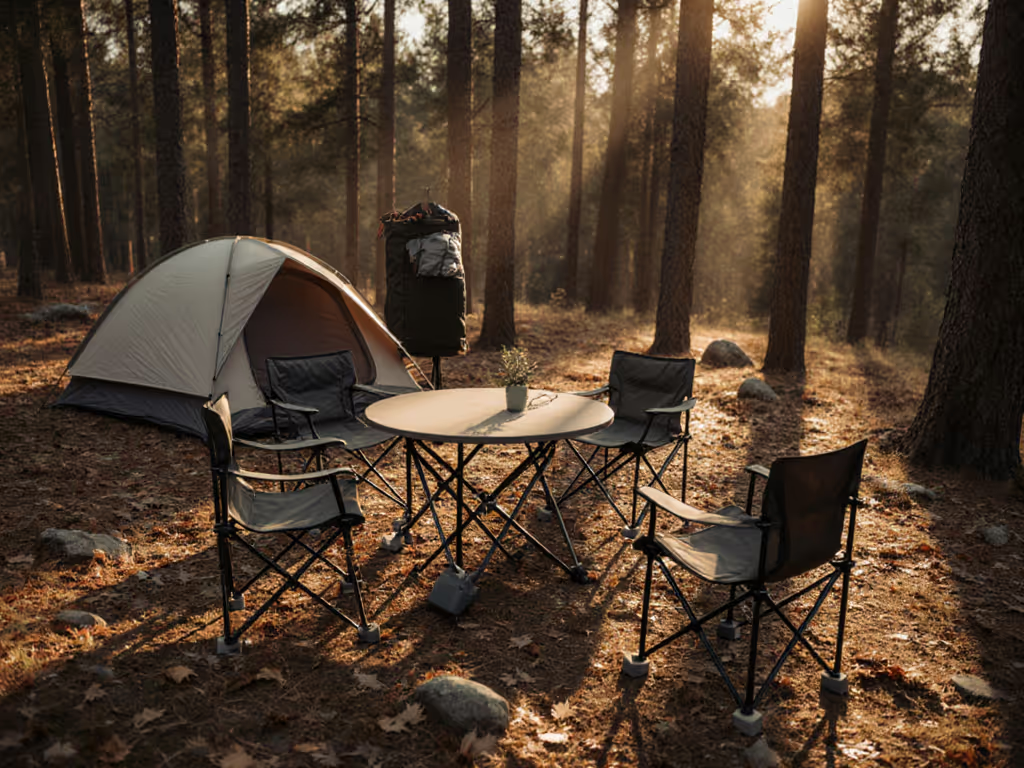
Dense vegetation bands: Minimum 30 ft width of conifers (not deciduous trees). Why? Broadleaf trees shed leaves seasonally; pine needles create layered absorption. Measure effectiveness: if you can't clearly see campers through the thicket, mid-range noise (voices, music) drops significantly.
-
Topographic deflection: Slopes >15° facing away from noise sources. Critical nuance: A ridge blocks line-of-sight noise but creates bass traps in valleys behind it. Position camps above ridgelines only if wind blows away from noise sources, otherwise, sound funnels into your site.
-
Water features: Riparian zones absorb sound best when flowing perpendicular to your camp axis. A stream parallel to your site merely channels noise toward you.
Spec for the wind you'll face, not the weather app. This applies doubly to acoustics: a canyon's morning breeze may carry neighbor camp chatter; that same corridor becomes silent at dusk when winds reverse.
Q3: How do I rapidly assess terrain for acoustic weaknesses?
Failure-mode language: Look for these red flags immediately:
- Hard ground surfaces (rock, packed sand) within 50 ft of camp: sound reflection hotspots. Fix: Scatter loose gravel/debris along noise-path edges.
- Concave landforms (dry lake beds, U-shaped valleys): act as parabolic reflectors. Fix: Angle sleeping quarters away from the curve's focal point.
- Flat horizons with no vegetation breaks: no natural attenuation. Fix: Create artificial barriers using tarps suspended between trees 5-10 ft high.
Anchoring spec: Carry a decibel meter app. At 70 dB (normal conversation), sound travels ~100 yds. At 85 dB (generator), reach extends to 500+ yds. Prioritize sites where initial readings stay below 65 dB during peak camp hours.
Q4: What's the optimal acoustic camp layout?
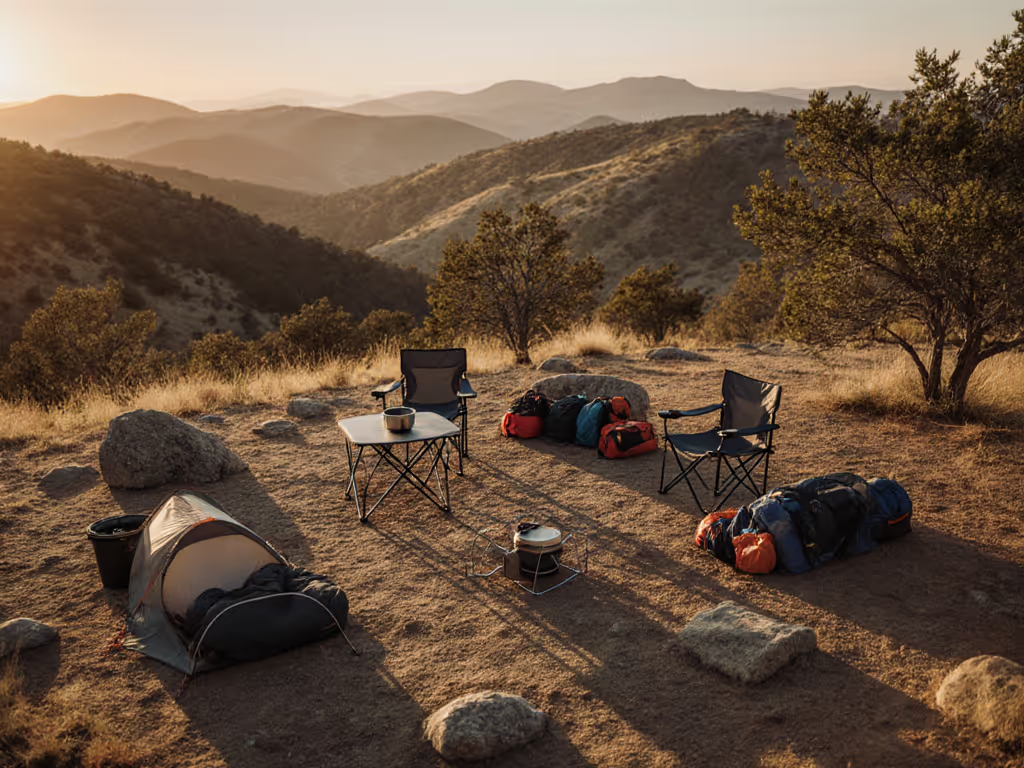
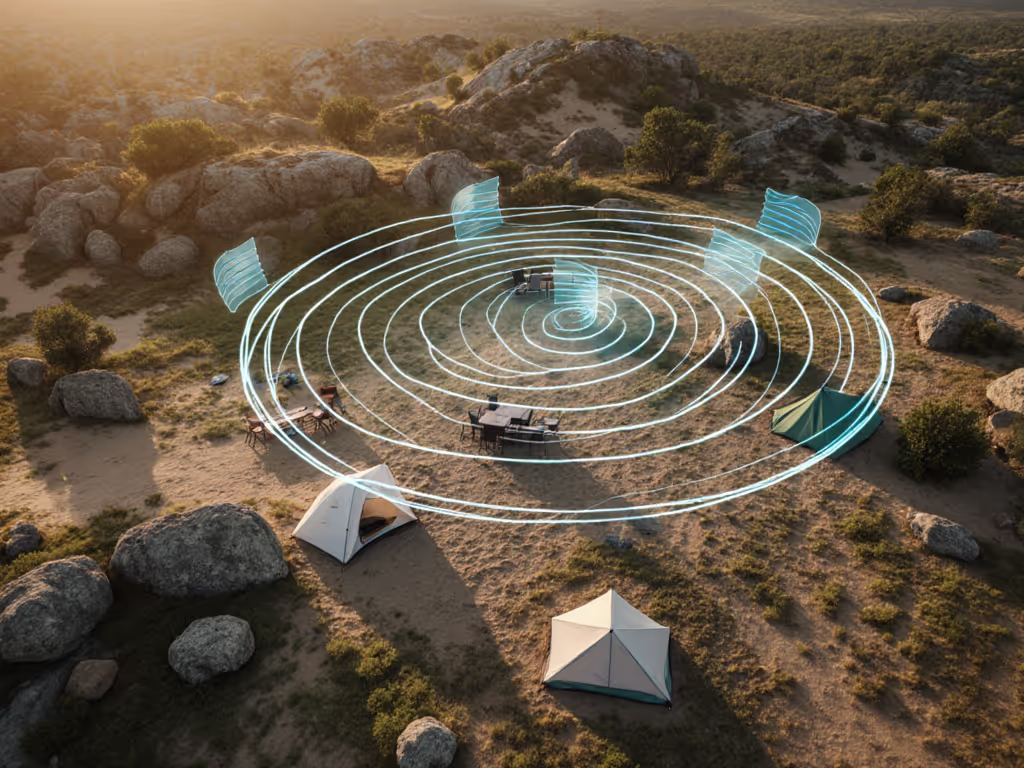
Explicit conditions dictate positioning. In exposed ridgelines (where I outfit most basecamps), I deploy this layout:
- Sleeping zones positioned upwind of kitchen/dining areas. Why? Cooking noise (clattering pots, burner hiss) travels downwind 2x farther than upwind.
- Dining tables 50+ ft from trailheads or access roads. Critical nuance: In dense forests, this spacing shrinks to 20 ft due to absorption, validate with voice tests.
- Fire rings set at 45° angles to neighbor sites rather than directly facing them. Physics hack: Sound radiates spherically, but angled placement exploits the 6 dB drop-off rule (double the distance = quarter the perceived volume).
Pragmatic tip: Flag your camp's "acoustic footprint" at setup. Use glow sticks to mark 30/60/100 yd radii. If voices carry beyond 60 yds, reposition communal zones immediately. For deeper placement strategies that encourage conversation without noise spillover, see our campsite layout psychology guide.
Q5: Can I create quiet zones on barren desert flats?
Yes, but only through terrain manipulation. On Utah's slickrock mesas, I've built acoustic privacy using:
-
Rock baffles: Stack boulders 2-3 ft high in staggered rows between your camp and noise sources. Placement rule: Gaps between rocks must be <1/3 the wavelength of target noise (e.g., for 500 Hz voices, gaps <2 ft).
-
Sand berms: Dig 6" deep trenches filled with loose sand parallel to noise paths. Data point: 12" deep sand reduces 1,000 Hz noise by 8-10 dB, equivalent to moving 2x farther from source.
-
Tarp walls: Use 8.5 x 10 ft silnylon tarps suspended 6 ft high. Key: Angle them at 15° toward noise, not perpendicularly. Flat surfaces reflect sound back to source; angled deflects upward.
Warning: Never rely solely on vegetation in deserts. Sparse bushes create diffraction zones where noise bends through gaps. If your goal is minimal disturbance while observing wildlife, explore our silent observation setup guide. Prioritize mass over height.
Q6: How do wind patterns impact sound management camping?
Wind direction changes everything. In my basalt shelf experience, afternoon katabatic blasts accelerated distant campfire singing into intrusive noise, but only when wind flowed from west to east. Identical sites were peaceful during easterly winds.
Anchoring protocol:
- Map dominant wind direction at your site for the season (not just current gusts)
- Position sleep zones downwind of kitchen/dining areas
- Place noise-generating zones (coolers, gear prep) upwind of neighbors
Critical metric: When wind exceeds 10 mph, low-frequency noise (<250 Hz) attenuation drops by 50%. This means generators become audible at 2x the distance. Always assume worst-case wind conditions when planning quiet zones.
Build for the Site
Sound management camping isn't about eliminating noise, it's about designing predictable acoustic boundaries. Your terrain already contains the tools: rock formations as bass traps, vegetation belts as frequency filters, and elevation changes as wave deflectors. I've watched groups achieve near-forest-level quiet in open deserts by leveraging these principles, while others with identical gear surrendered to noise because they treated acoustics as secondary to flat tent spots.
Final truth: True campsite privacy isn't found, it's built. Measure sound paths like you'd test anchor points for hurricane winds. Place your dining zone where the canyon's natural reverb supports conversation, not drowns it. For posture and seating distances that reduce vocal strain, see our campsite ergonomics plan. When you build for the site instead of the brochure's meadow, your camp becomes a self-contained sanctuary. Dinner continues, conversations unbroken, even when the valley hums with distant life.
Want deeper tactical guidance? Explore our field-tested terrain assessment checklist for acoustic campsite selection.
Related Articles