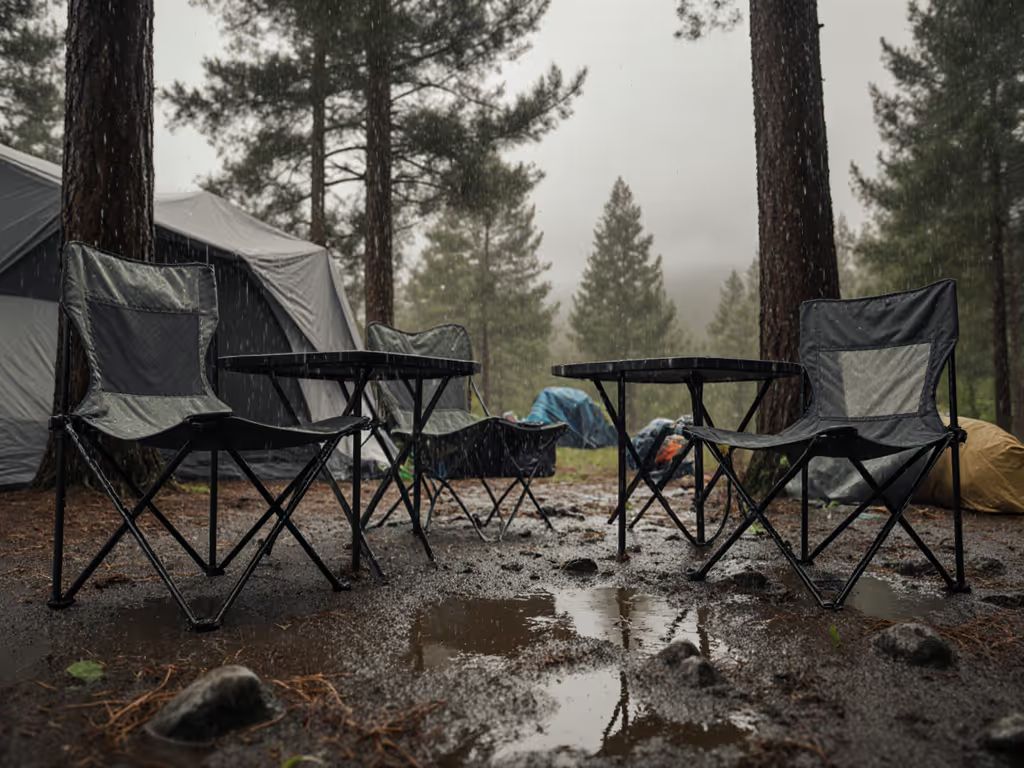
Solar Furniture vs. Power Banks: Off-Grid Comparison
By Riley Park • 28th Apr
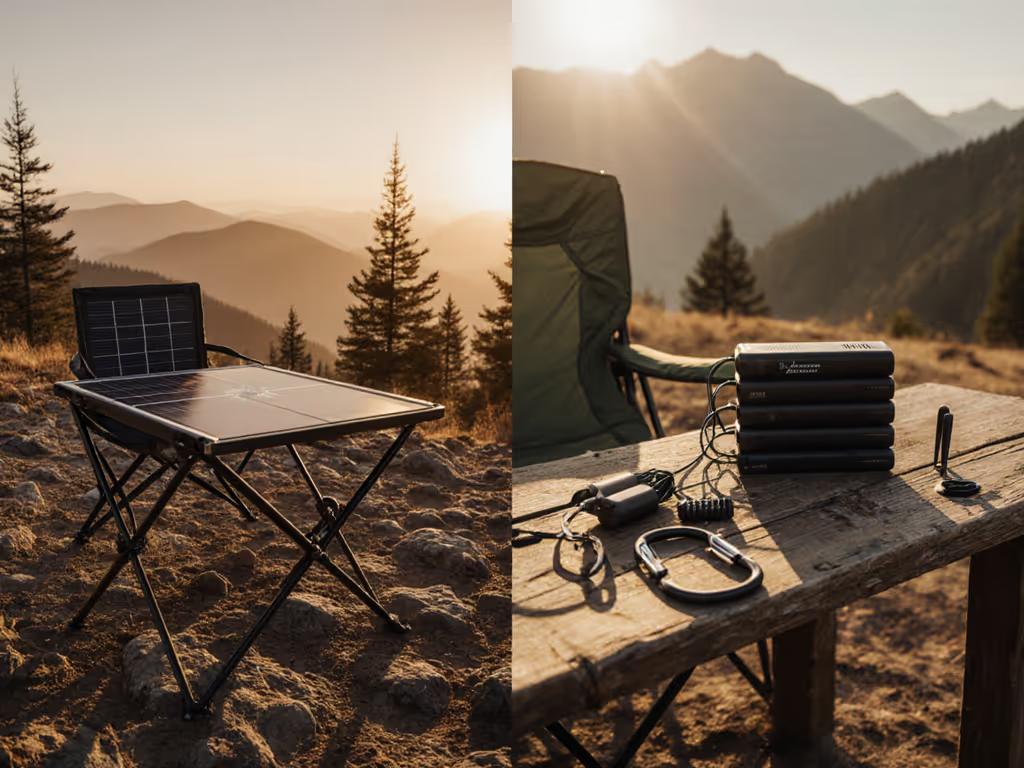
Why Power Isn't Just About Batteries, It's About Your Whole Camp
Off-grid power solutions and solar-powered camping furniture frame a false choice. The real question isn't whether you buy a power bank or hang a solar panel, it's whether your entire camp system works as one. Riley Park has spent seasons testing how charge capacity, furniture layout, and packing efficiency cluster together. Measure twice, pack once. Your camp should click into place. That means power decisions can't float separately from chair heights, table stability, and how fast you can move from truck to campfire. For layout fundamentals that make power decisions easier, see our camp furniture setup guide.
FAQ: Power Banks, Solar Chargers, and Why Camp Design Matters
What's the core difference between a power bank and a solar charger?
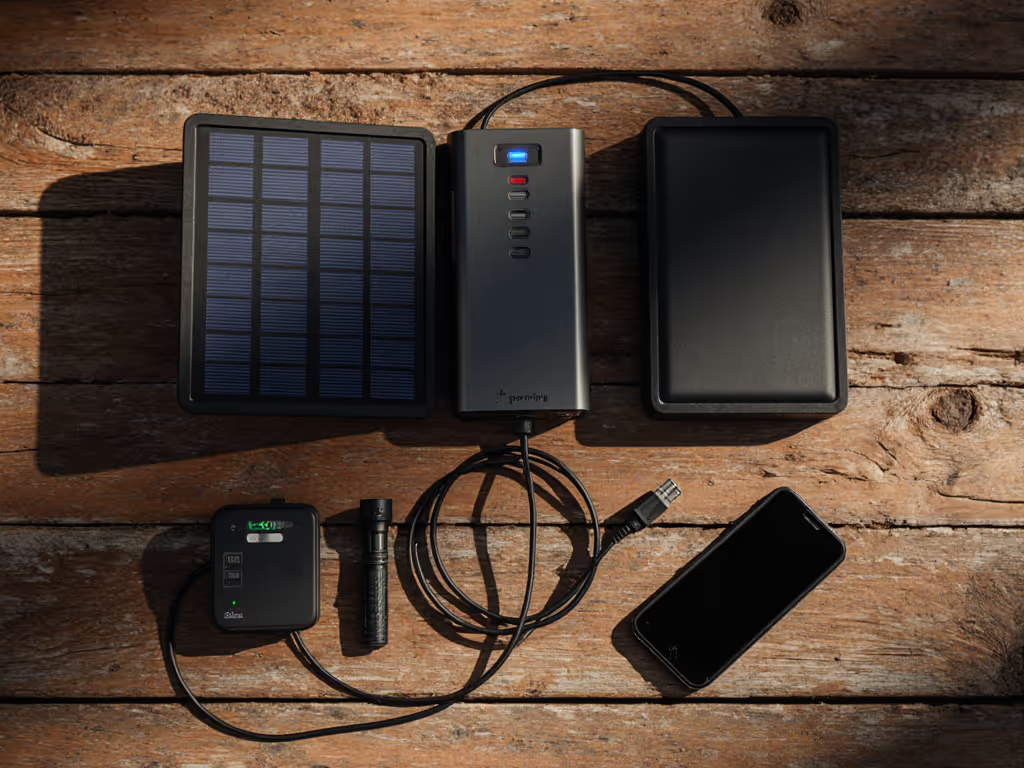
A power bank is a pre-charged battery (typically 5,000-20,000 mAh for portable models). You charge it at home, pack it, and it delivers fixed energy until depleted. A solar charger pairs a photovoltaic panel with either internal battery storage or direct pass-through to your devices; capacity ranges from 200Wh to over 2,000Wh when paired with a power station component. Solar chargers require sunlight and weather cooperation but can theoretically renew themselves as long as daylight exists.
When should I choose a power bank for camping?
For trips up to 3-4 days, power banks are usually the better choice. They're lighter, more reliable, and don't depend on sunlight. One or two mid-capacity units (10,000 mAh each) handle phones, tablets, and GPS devices without the weight penalty of solar panels and their supporting battery boxes. Short trips compress the setup window (high cognitive load matters), so fewer moving parts win. If your camp furniture is tight and trunk space is contested, a compact power bank leaves room for coolers, water, and stable tables.
When does a solar solution make sense?
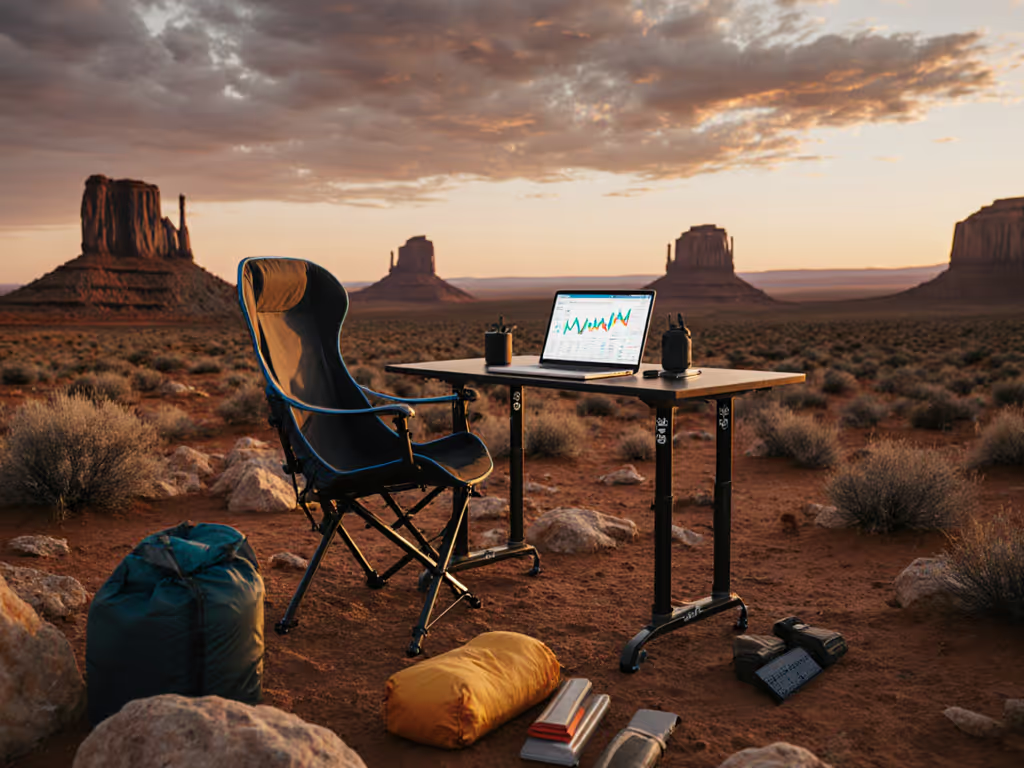
Beyond 4-5 days, or if you're carrying multiple power-hungry devices, a solar charger becomes essential. A portable power station paired with a foldable solar panel can keep lights, GPS, cameras, and satellite communicators running indefinitely, freeing you from campground electrical hookups. This is the quintessential multi-day camping use case. Critically, a renewable source removes the pre-trip charging stress and the mid-trip dead-battery scramble. However, solar requires weather stability and honest accounting of cloud cover, altitude, and seasonal sun angle (none of which are given). A solar system also demands protected placement: a panel left exposed to sand, wind, or dust loses efficiency fast. Your furniture layout must now include a sunny, stable spot for the panel, away from foot traffic and spill zones. Stability is a comfort multiplier, and that applies to your power station just as much as your table legs. For wobble-free surfaces, compare our stability-tested folding tables before you position panels or stations.
What's the weight and packing penalty?
A high-capacity power bank (10,000-20,000 mAh) weighs 0.2-0.4 lb and fits a jacket pocket. A foldable solar charger and its paired power station together add 2-4 lb depending on capacity. If you're car camping with a short walk from the parking area, that's negligible. If you're hand-carrying gear more than 50 meters or have a vehicle with constrained cargo space, the math shifts. If cargo space is tight, explore our space-saving camp furniture to free room for power gear. A family of four with a compact SUV and kids' gear needs to map power infrastructure against cooler, water, stove fuel, and furniture bins. A power bank occupies almost no cubic footage; a solar panel, even tri-fold, claims a dedicated slot. One team member's multi-day solo trip might justify solar; a family reunion at a river basecamp might not, especially if you're already at capacity with modular dining tables and auxiliary storage.
Can I use both (a power bank AND a solar charger)?
Yes, and often that's the pragmatic hybrid. Bring a lightweight power bank for the first few days and a solar panel and power station as a renewal option once onsite. The power bank buys you insurance and flexibility in unpredictable weather; the solar panel ensures you're not left stranded if the trip extends or clouds roll in. The tradeoff is carrying both, which consumes space and weight, exactly the constraint that mirrors furniture scaling. In a 6-person camp, one power station + panel serves the group; in a 2-person setup, splitting the load (person A carries the power bank, person B carries the solar kit) distributes heft but adds coordination friction.
What about temperature and longevity?
Lithium-ion batteries inside all power banks are sensitive to high temperatures. Desert camps and fully sun-exposed tables wreak havoc on stored charge. A power station sitting in direct sun will degrade faster than one kept in shade or inside a cooler bag. This loops back to furniture and site setup: where do you place the power station? On the ground under a table? In a cooler? Hanging from a hammock frame? Each choice affects both the lifespan of the battery and the flow of your camp zone. A well-designed camp layout answers this question before you arrive; furniture placement is part of the energy-management system, not an afterthought.
How do I choose between these for my group size and trip length?
Use a matrix:
| Trip Length | Device Count | Best Choice | Why |
|---|---|---|---|
| Up to 3 days | 1-2 (phone, GPS) | Power bank (10,000 mAh) | Light, reliable, no weather risk |
| Up to 3 days | 3+ (phones, cameras, coolers, lights) | Power bank + lightweight solar | Redundancy without excess |
| 4-7 days | 1-2 | Power bank or solar hybrid | Solar shines; power bank is backup |
| 4-7 days | 3+ | Solar charger + power station | Infinite renewal beats depletion |
| 7+ days, off-grid | Any | Solar + power station + power bank safety net | Full autonomy; weather insurance |
But real-world camping isn't a spreadsheet. A 4-day trip to a beach with high UV reflectance and consistent sun argues for solar; the same trip to a forest with dense canopy argues for power banks. A basecamp where you're stationary favors solar (stable panel placement); a roaming trip with daily moves favors compact power banks (quick pack, no setup tax).
What's the overlap with a well-designed camp furniture system?
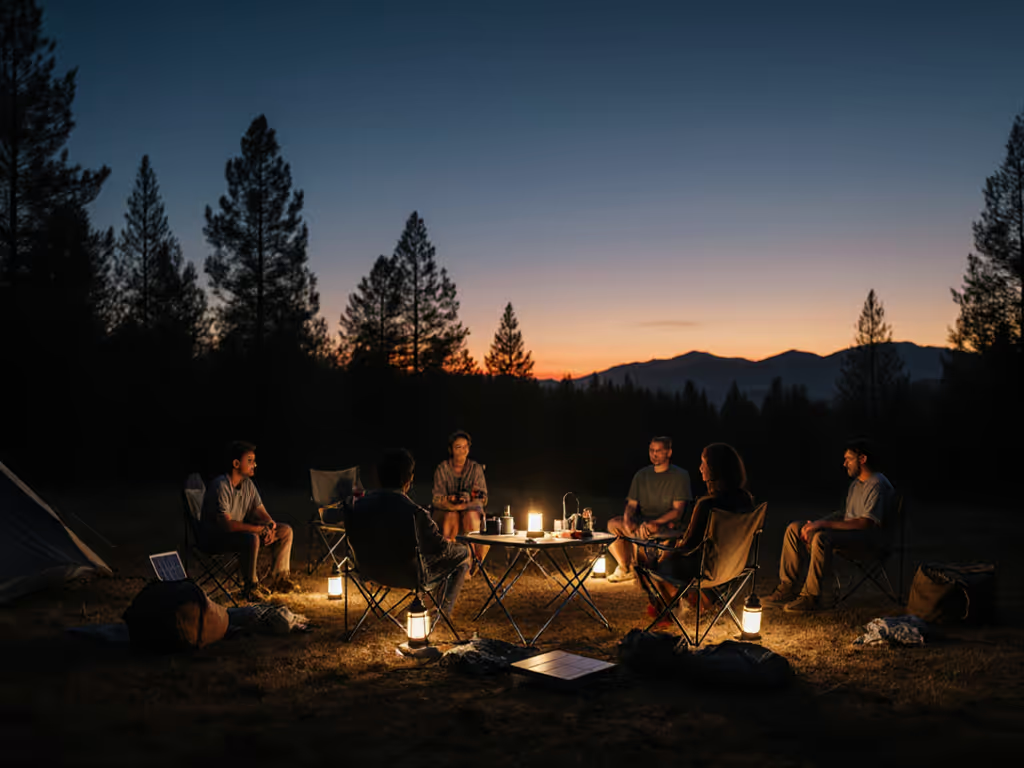
This is where the pieces click together. A camp works when furniture is a system, not a pile. That principle applies to power just as much as seating. In a tight basecamp (6-8 people, three-day weekend), you optimize for setup speed and modular expansion. A single power station, one solar panel, and a dedicated storage zone near the charging hub replaces the chaos of four hand-charged power banks, extension cords, and cables strewn across the table. The power station becomes a fixed anchor (comparable to a central dining table or a cot frame) around which other elements organize. Use campsite zoning to designate a protected charging hub away from spill and foot-traffic zones. Stable, predictable, no rescaling required. If you're scaling up to 10 people, you don't buy 10 power banks; you add another solar + station unit. Scalability in furniture (add a leaf table, two more chairs) mirrors scalability in power (add another station). Measured setup time falls. Pack volume compresses. Stability improves.
Should I invest in solar-powered furniture itself (chairs with built-in panels, tables with USB ports)?
Skeptical take: Most solar-integrated furniture is novelty-forward, not scenario-tested. To separate gimmicks from useful upgrades, start with our guide to smart camping furniture. A camp chair with a tiny embedded solar panel might trickle-charge a phone over eight hours of perfect sun exposure: slow, unreliable, and it adds weight and cost to a chair that should excel at stability and pack efficiency. A table with USB ports is only useful if you've planned the power station location and cable runs ahead of time; otherwise, it's a gimmick. Genuine solar-powered furniture is rare and expensive, and it often sacrifices the core attributes (pack size, setup speed, leg stability on sand/rock) that matter most in a real basecamp. Instead, design your furniture and power systems as separate, compatible modules that work together, not a single overloaded piece. A stable table with a power station sitting nearby, connected by one clean cable, beats a solar table by every metric that matters in the field.
Further Exploration
The best off-grid power choice depends on your trip length, device count, weather confidence, and available trunk space. Start by auditing your actual usage: how many devices, how long between recharges, and how often you camp off-grid. Then layer that against your furniture footprint and setup constraints. A family with a tightly packed SUV and predictable weekend trips to developed campgrounds might never justify a solar station. A remote basecamp group or a roaming overlander absolutely should test the hybrid (power bank + solar panel) and measure the real-world charge curves, cloud impact, and packing fit over a season. Document setup time and stability in wind. Log which devices drain fastest. Then design a camp that integrates both furniture and power as a coherent system (one that feels intentional and clicks into place every time). Stability is a comfort multiplier. That spans everything you sit on, sleep in, eat at, and plug into.
Related Articles